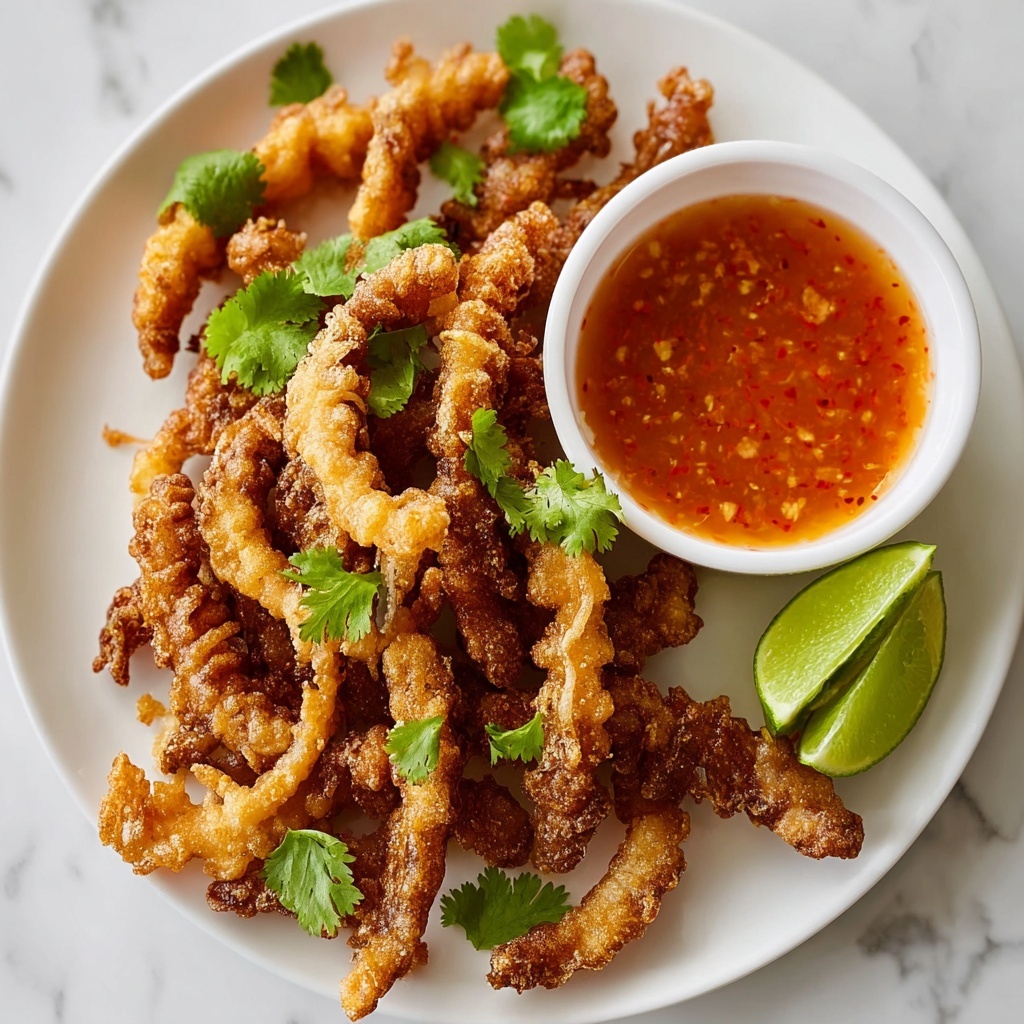
If you’re on the hunt for a bold and crunchy treat that’s packed with amazing flavor, you’ve just found it with this Crispy Pork Ear Strips Recipe. The pork ears get wonderfully tender through boiling, then transform into irresistible golden strips with a delicate crispness after frying. This dish is a perfect combination of texture and seasoning that delivers a satisfyingly crunchy bite, making it a fantastic snack or appetizer to impress friends or simply enjoy a loved comfort food with a twist.

Ingredients You’ll Need
Gathering simple ingredients is the secret to making this Crispy Pork Ear Strips Recipe shine. Each element balances to enhance the pork’s natural flavor while adding a delightful savory punch and beautiful color.
- 3 cups pork ears: The star of our dish, providing the unique texture and flavor that makes this recipe stand out.
- 1 teaspoon salt: Essential for drawing out flavor during boiling and seasoning afterward.
- 1 teaspoon black pepper: Adds a gentle heat and aromatic depth to the strips.
- 1 tablespoon garlic powder: Brings a warm, savory touch that complements pork perfectly.
- 1 tablespoon onion powder: Provides sweetness and enhances the overall seasoning profile.
- Oil for frying: Must be a neutral oil with a high smoke point to achieve that perfect crispy texture without overpowering flavors.
How to Make Crispy Pork Ear Strips Recipe
Step 1: Clean and Prepare the Pork Ears
Start by thoroughly cleaning the pork ears to remove any impurities. This careful prep is key because the purity of the meat directly affects the final taste and texture.
Step 2: Boil Until Tender
Next, boil the pork ears in salted water for about one hour until they become tender. This step softens the tough cartilage, allowing the ears to cook through while soaking in some saltiness, which starts to build layers of flavor.
Step 3: Cool and Slice Into Thin Strips
After boiling, allow the ears to cool so you can handle them easily. Then, slice them into thin strips. The thin cut helps the strips become extra crispy when frying and makes them perfect for snacking.
Step 4: Season the Strips
Generously season the pork ear strips with salt, black pepper, garlic powder, and onion powder. This blend creates a savory and aromatic coating that will infuse flavor as they cook.
Step 5: Heat the Oil for Frying
Pour enough oil into a deep frying pan and heat it over medium-high heat. Properly heated oil ensures the pork strips fry quickly and evenly without absorbing excess oil.
Step 6: Fry Until Crispy
Carefully fry the pork ear strips in batches to avoid overcrowding. Fry for about 4 to 5 minutes or until you see a beautiful golden-brown crisp forming. The sizzling sound alone will make your mouth water!
Step 7: Drain and Serve
Once fried to perfection, transfer the strips to paper towels to drain any excess oil. This final step keeps them delightfully crisp and ready to enjoy.
How to Serve Crispy Pork Ear Strips Recipe
Garnishes
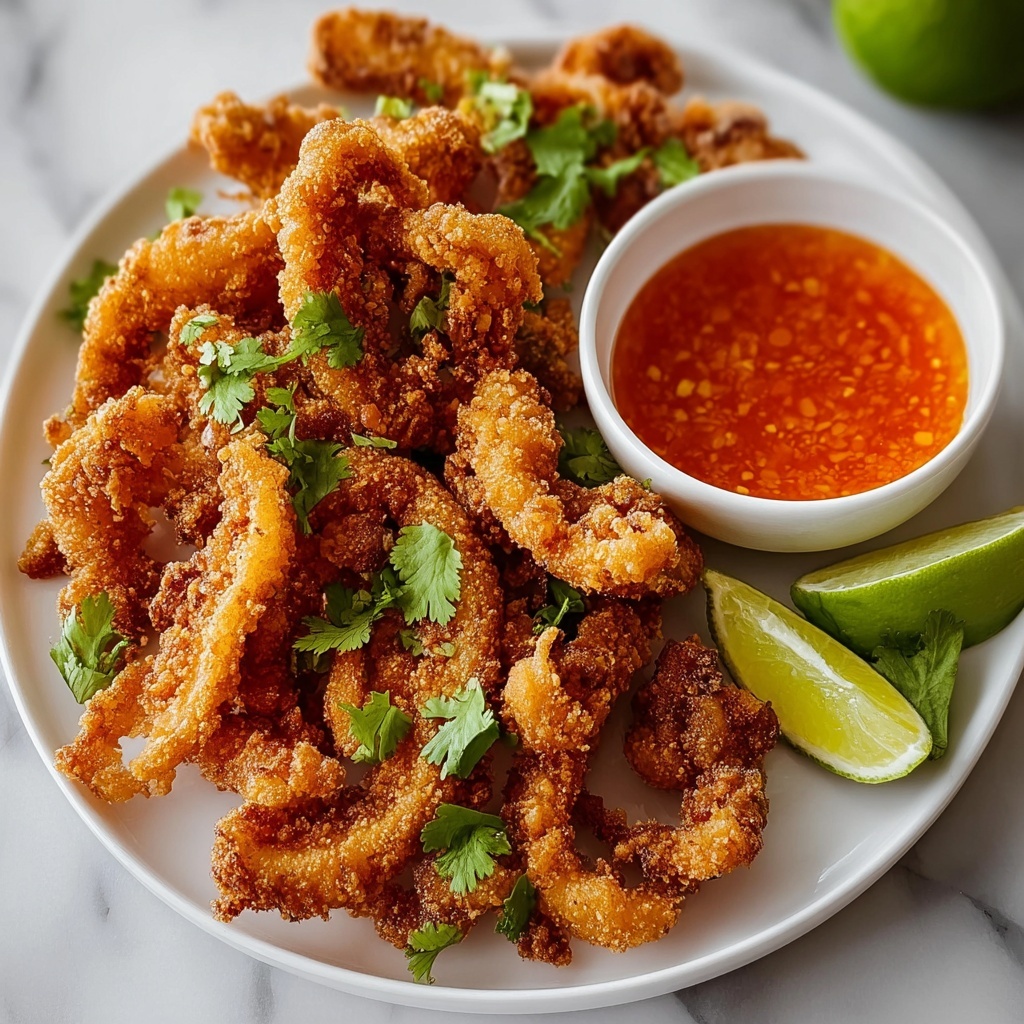
A sprinkle of fresh chopped parsley or cilantro adds a vibrant green contrast and fresh note to balance the richness. For a spicy kick, a light dusting of chili flakes or a dip of tangy vinegar-based sauce also pairs beautifully with the crispy texture.
Side Dishes
Complement the crispy pork ears with cooling sides like a crisp cucumber salad or a simple coleslaw. These fresh accompaniments provide a refreshing crunch and acidity to balance the hearty fried strips perfectly.
Creative Ways to Present
For an eye-catching appetizer, arrange the strips on a wooden board with small ramekins of assorted dips—think garlic aioli, spicy mustard, or sweet chili sauce. You can also serve them wrapped in lettuce leaves for a fresh handheld snack experience.
Make Ahead and Storage
Storing Leftovers
Place any leftover crispy pork ear strips in an airtight container and refrigerate. They will keep well for up to 2 days, but be aware that the crispness may begin to soften as they sit.
Freezing
While freezing is possible, it’s best to do so before frying. Freeze the boiled and sliced pork ears in a sealed bag for up to one month. When ready, thaw completely and fry fresh for the best texture.
Reheating
To reheat, avoid microwaves to preserve crispiness. Instead, warm the strips in a single layer under a preheated oven at 350°F (175°C) for about 5-7 minutes. This will refresh the crunch and heat them through evenly.
FAQs
Can I use pork ear from the store or do I need to prepare it fresh?
You can use either fresh or frozen pork ears from the store. Just ensure they are thoroughly cleaned and properly prepared before boiling. Fresh ears tend to have a slightly better texture, but frozen works perfectly too when thawed properly.
Is it necessary to boil the pork ears before frying?
Yes, boiling is essential because pork ears are quite tough and full of cartilage. Boiling tenderizes them, making the frying step yield beautifully crispy yet tender strips rather than chewy pieces.
What type of oil is best for frying the pork ears?
A neutral-flavored oil with a high smoke point, such as vegetable, canola, or peanut oil, works best. These oils let the crispy pork ear strips develop a nice golden color without imparting unwanted flavors.
Can I add other spices to the seasoning?
Absolutely! While this Crispy Pork Ear Strips Recipe uses a simple classic blend, feel free to experiment with smoked paprika, cayenne pepper, or even a pinch of five-spice powder for an exciting twist.
Are pork ear strips healthy?
Pork ears are a source of collagen and protein but are also high in fat due to the frying process. They’re delicious as an occasional indulgence that pairs well with fresh vegetables or salads to balance the meal.
Final Thoughts
There’s something undeniably charming and satisfying about this Crispy Pork Ear Strips Recipe, from the tender boiling step to the addictive crunch of frying. Whether you’re serving it at a lively gathering or enjoying a cozy night in, these strips bring fun, flavor, and texture to the table. So go ahead, try making this at home—you might just discover a new favorite snack that impresses everyone.
Print
Crispy Pork Ear Strips Recipe
- Prep Time: 15 minutes
- Cook Time: 1 hour 10 minutes
- Total Time: 1 hour 25 minutes
- Yield: 4 servings
- Category: Appetizer
- Method: Frying
- Cuisine: International
Description
Crispy Pork Ear Strips are a deliciously crunchy snack or appetizer made by boiling pork ears until tender, then slicing and deep-frying them to golden perfection with a flavorful seasoning blend. This recipe delivers a savory, crispy treat perfect for enjoying with friends or as a unique addition to your meat dishes.
Ingredients
Main Ingredients
- 3 cups pork ears
- 1 teaspoon salt
- 1 teaspoon black pepper
- 1 tablespoon garlic powder
- 1 tablespoon onion powder
- Oil for frying (about 2 cups or enough for deep frying)
Instructions
- Prepare the Pork Ears: Clean the pork ears thoroughly under cold running water to remove any impurities and hair. This step ensures the ears are ready for cooking and safe to eat.
- Boil Pork Ears: Place the cleaned pork ears in a large pot of salted water and boil over medium heat. Cook for about 1 hour or until the ears are tender but still firm enough to hold shape when sliced.
- Cool and Slice: Remove the pork ears from the boiling water and allow them to cool completely. Once cooled, cut them into thin strips for frying.
- Season the Strips: In a bowl, toss the pork ear strips with salt, black pepper, garlic powder, and onion powder until they are evenly coated with the seasoning mix.
- Heat the Oil: Pour oil into a deep frying pan or pot and heat over medium-high heat until it reaches approximately 350°F (175°C). This temperature is ideal for deep frying to achieve a crispy texture.
- Fry the Pork Ear Strips: Carefully add the seasoned pork ear strips to the hot oil in batches to avoid overcrowding. Fry for 4-5 minutes or until the strips are golden brown and crispy.
- Drain and Serve: Remove the fried pork ear strips from the oil with a slotted spoon and place them on paper towels to drain excess oil. Serve hot and enjoy as a crunchy snack or appetizer.
Notes
- Ensure pork ears are thoroughly cleaned before cooking to remove any hair or residue.
- Adjust seasoning quantities to taste, especially salt and pepper.
- Maintain oil temperature to prevent soggy or greasy strips; overheating can burn the exterior too quickly.
- Fry in batches to keep the oil temperature consistent for crispy results.
- Use a thermometer to monitor oil temperature for best frying results.