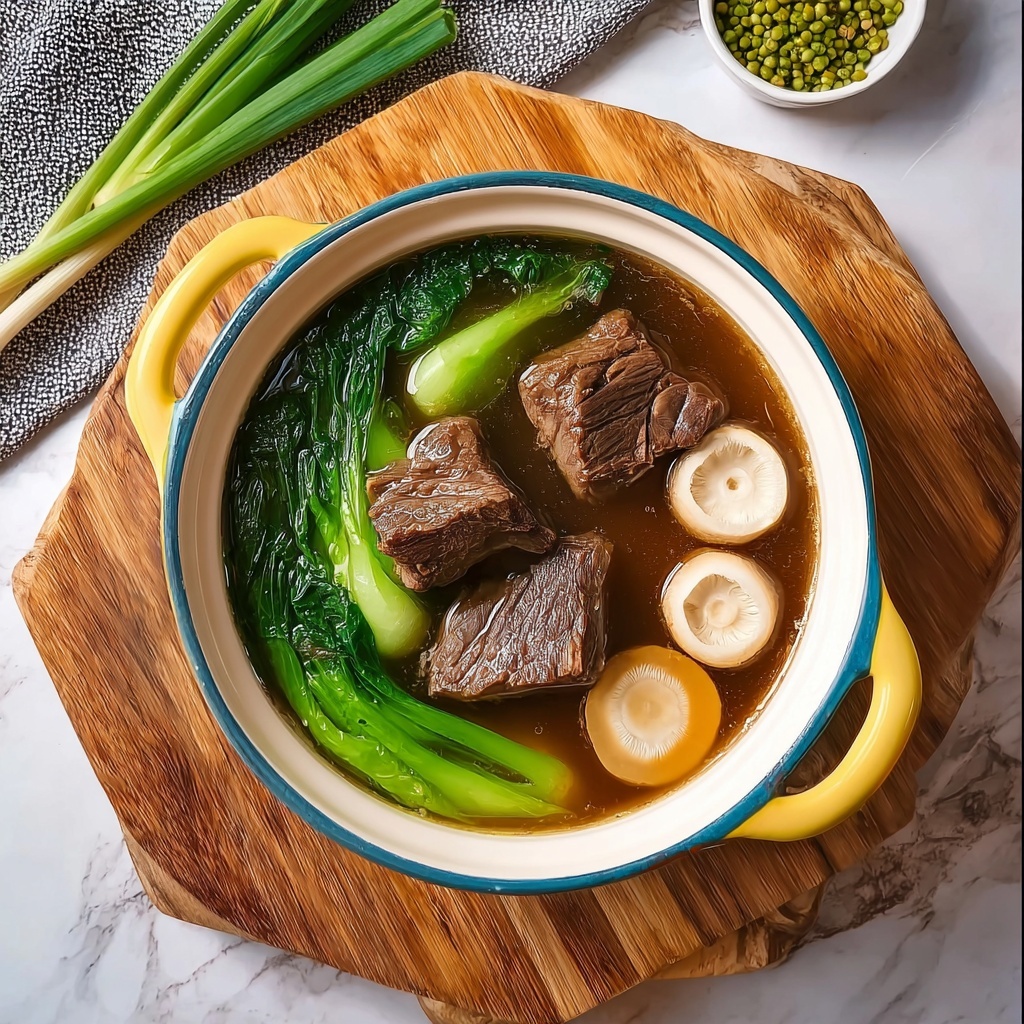
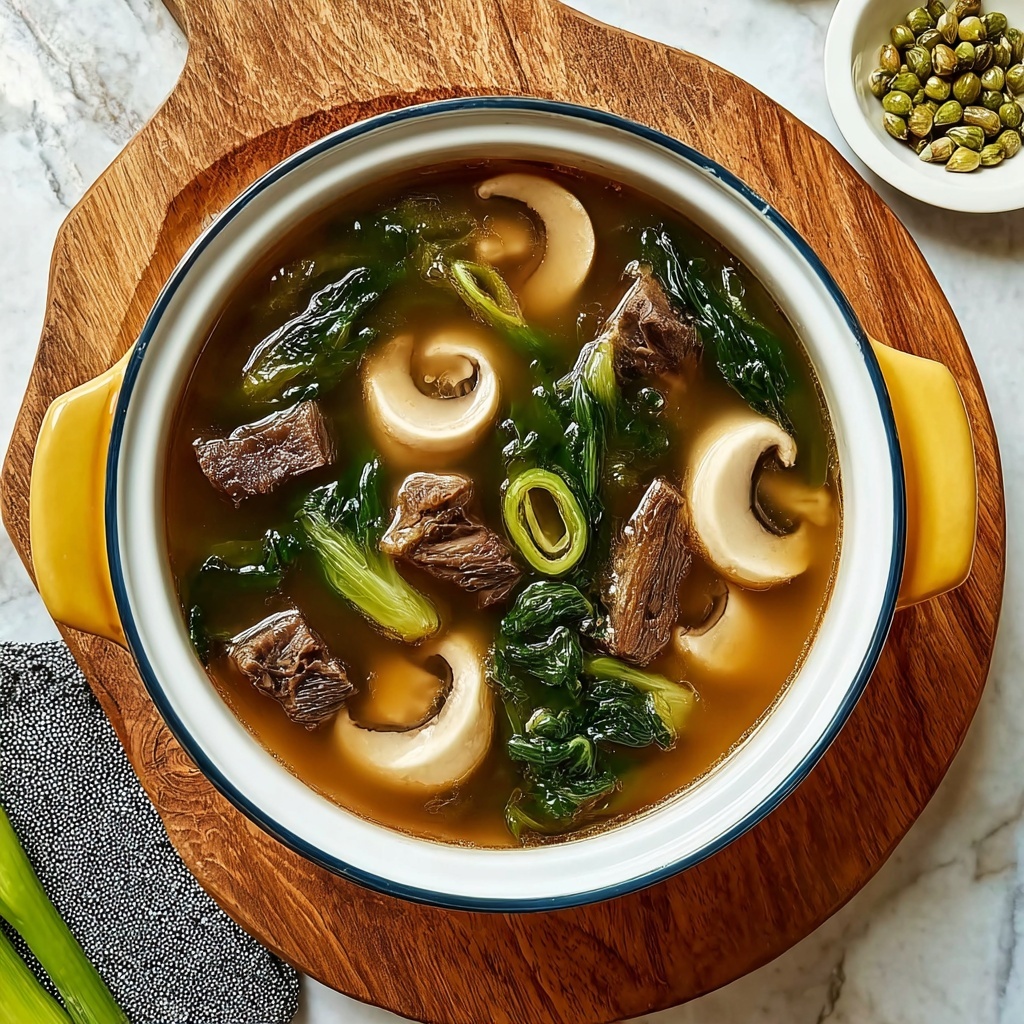
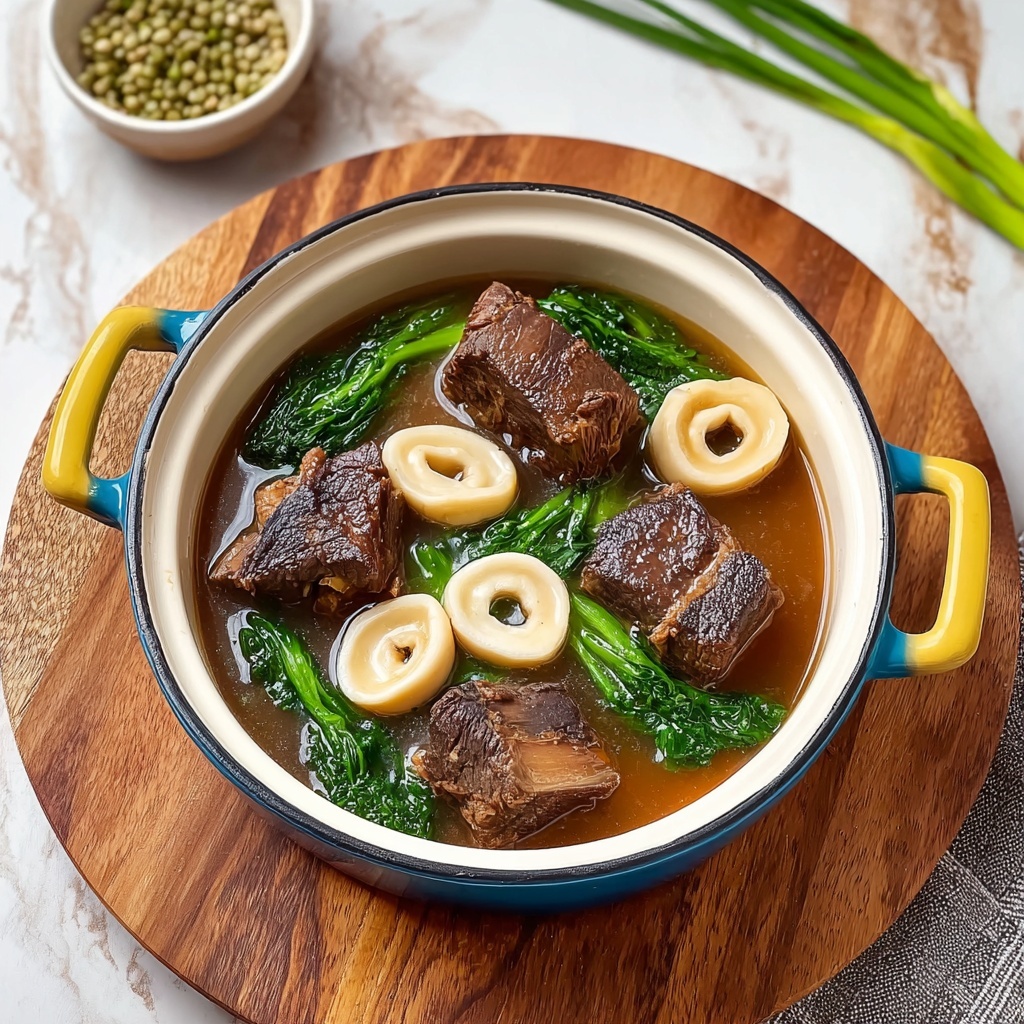
If you’re craving a soulful, heartwarming soup that just wraps you in comfort with every spoonful, look no further than this Melt-in-Your-Mouth Nilagang Baboy for Cozy Nights Recipe. This classic Filipino stew features tender pork ribs simmered slowly to yield a rich and flavorful broth that’s perfectly balanced by starchy potatoes, subtly sweet saba bananas, and fresh green vegetables. It’s that perfect bowl to curl up with on a chilly evening, inviting both nostalgia and pure satisfaction with each bite.
Ingredients You’ll Need
Gathering just a handful of straightforward, fresh ingredients is all it takes to build this beautiful harmony of flavors. Each item plays a vital role—from the hearty pork ribs creating the broth’s backbone, to the green saba bananas offering a unique sweetness that sets this stew apart.
- 2 pounds Pork ribs: Essential for a rich and hearty flavor that melts beautifully during simmering.
- 8 cups Water: The base for a soothing, clear broth that brings everything together.
- 1 medium Yellow onion: Adds depth and enhances the savory notes with natural sweetness.
- 1 teaspoon Peppercorn: Infuses a subtle warmth without overpowering the broth.
- 2 tablespoons Fish sauce: Provides umami and rounds out the dish’s savory qualities wonderfully.
- 3 medium Potatoes: Creamy and filling, perfect for soaking up all the delicious broth.
- 2 pieces Green saba bananas: Bring an unexpected sweet contrast that balances the flavors beautifully.
- 1 cup Baguio beans (green beans): Adds a satisfying crunch and fresh brightness.
- 1 bunch Onion leek or green onion: Offers a gentle onion fragrance lifted in the final simmer.
- 1 cup Pechay (cabbage): A tender leafy green that adds nutrition and softness.
- Salt and pepper to taste: Essential for seasoning to bring all the flavors into perfect harmony.
How to Make Melt-in-Your-Mouth Nilagang Baboy for Cozy Nights Recipe
Step 1: Prepare the Pork
Start by placing the pork ribs in a large pot and covering them with just enough water to submerge. Bring to a rolling boil on high heat. This first boil is the secret to a clean and clear broth—once scum rises to the surface, turn off the heat, discard the water, and rinse the ribs thoroughly. This step removes impurities and sets the stage for a beautifully clean-tasting nilaga.
Step 2: Simmer for Flavor
Return the cleaned pork ribs to the pot and pour in 8 cups of fresh water. Toss in the yellow onion sliced in half, whole peppercorns, and fish sauce. Bring it back to a boil over high heat, then cover and reduce to a gentle simmer. Let the meat cook slowly for about 1 hour, until it’s tender and practically falling off the bone—this slow simmer builds the soul of the soup.
Step 3: Prepare the Vegetables
While the pork is simmering, get your veggies ready. Wash and peel the potatoes before cutting them into quarters. The green saba bananas require a quick trim of the ends and slicing diagonally into three pieces each; soak both in water to prevent discoloration. These will add both heartiness and a subtle sweetness later on.
Step 4: Chop and Wash the Greens
Trim the pechay leaves and wash thoroughly to remove any grit. Remove the ends from the Baguio beans and cut them into 3-inch lengths. Finally, trim the root end from the onion leek or green onion and slice into 2-inch pieces. These fresh greens will bring vibrant color and texture contrasts to the dish.
Step 5: Cook the Bananas and Potatoes
Add the saba bananas to the simmering pot first and cook for about 5 minutes. Follow with the quartered potatoes, and simmer for another 5 minutes. Finally, add in the green beans. This layered approach ensures all vegetables reach perfect tenderness without falling apart.
Step 6: Season and Add Greens
Taste the broth and season with salt and pepper as needed. Then, gently stir in the chopped green onions and pechay. Cover the pot and allow these leafy greens to soften slightly for about a minute, allowing their flavors to meld beautifully before turning off the heat.
Step 7: Serve and Enjoy
Ladle your hot, savory nilaga into bowls or a large soup pot. This dish is a superstar when served alongside steamed rice, and a zesty side of spicy fish sauce on the side can add a thrilling kick for those who crave extra flavor. It’s pure comfort in a bowl, guaranteed to brighten any cozy night.
How to Serve Melt-in-Your-Mouth Nilagang Baboy for Cozy Nights Recipe
Garnishes
While the dish is hearty enough on its own, fresh green onions or a handful of chopped cilantro sprinkled on top can enhance the freshness and add a pop of color. For an extra touch of flair, a drizzle of calamansi juice or a wedge on the side gives a lovely citrus brightness.
Side Dishes
Pairing this soup with plain steamed rice is a must-have tradition, as the rice soaks up the savory broth perfectly. If you want to go extra, a small bowl of bagoong (fermented shrimp paste) or a side of atchara (pickled papaya) can offer delightful tangy contrasts that make each spoonful even more exciting.
Creative Ways to Present
Consider serving nilagang baboy family-style in a rustic clay pot to keep it warm and convivial. You can also turn the broth into a fondue-like experience where guests can add fresh raw vegetables or noodles to the hot soup for a fun twist. Either way, this dish invites communal eating and joyful sharing.
Make Ahead and Storage
Storing Leftovers
This nilagang baboy keeps beautifully in the refrigerator for up to 3 days. Store it in an airtight container to preserve its fresh flavors. The soup might thicken as it cools—just reheat gently with a splash of water or broth to bring it back to its original comforting consistency.
Freezing
If you want to stash some for even longer, this soup freezes very well. Portion it into freezer-safe containers and freeze for up to 2 months. When you’re ready, thaw overnight in the fridge to keep the meat tender and the vegetables intact during reheating.
Reheating
Reheat nilagang baboy gently on the stove over low to medium heat. Stir occasionally to heat evenly and avoid breaking the vegetables too much. If it seems too thick, add a bit of water or broth, and adjust the seasoning to taste before serving again.
FAQs
Can I use other cuts of pork for this recipe?
Absolutely! While pork ribs are traditional and give a lovely marrow-rich broth, you can also use pork shoulder or pork belly. Just adjust the cooking time depending on how fatty or lean the cut is to ensure the meat becomes tender and flavorful.
Why are saba bananas used in this stew?
Saba bananas add a naturally sweet and slightly starchy element that balances the savory richness of the pork broth. They’re a Filipino staple that gives nilagang baboy its characteristic flavor profile, but you could substitute with plantains if saba isn’t available.
Can I make this dish vegetarian?
While traditional nilagang baboy relies on pork for depth, you can create a vegetarian version by using vegetable broth and substituting the pork with hearty mushrooms or tofu. The key is building a robust broth layered with garlic, onion, and seasoning for a similar comforting effect.
Is it better to simmer or boil the soup?
Simmering is crucial for this recipe. Boiling vigorously can toughen the meat and cloud the broth. A gentle simmer allows flavors to develop slowly and the meat to become tender, achieving that unforgettable melt-in-your-mouth texture.
What other vegetables can I add to nilagang baboy?
Feel free to get creative with veggies! Corn on the cob, cabbage, or even bok choy work wonderfully. Just add them towards the end of cooking to maintain their texture and color, enhancing both nutrition and flavor.
Final Thoughts
This Melt-in-Your-Mouth Nilagang Baboy for Cozy Nights Recipe is truly a treasure that brings warmth, comfort, and a little bit of home with every bowl. Whether you’re feeding family or just indulging yourself after a long day, it’s a guaranteed way to make your evening special. So grab those ingredients, let the pot simmer low, and get ready to fall in love with this hug-in-a-bowl classic.
Print
Melt-in-Your-Mouth Nilagang Baboy for Cozy Nights Recipe
- Prep Time: 15 minutes
- Cook Time: 1 hour 15 minutes
- Total Time: 1 hour 30 minutes
- Yield: 6 servings
- Category: Soup
- Method: Stovetop
- Cuisine: Filipino
Description
Nilagang Baboy is a traditional Filipino boiled pork soup known for its melt-in-your-mouth tender pork ribs and comforting broth. This hearty dish features a medley of vegetables including potatoes, green saba bananas, Baguio beans, and leafy greens simmered to perfection, making it perfect for cozy nights. Enhanced with fish sauce, peppercorns, and fresh aromatics, it’s a wholesome and satisfying meal best served with rice and a side of spicy fish sauce for an extra kick.
Ingredients
Meat and Broth
- 2 pounds Pork ribs
- 8 cups Water
- 1 medium Yellow onion, sliced
- 1 teaspoon Peppercorn
- 2 tablespoons Fish sauce
Vegetables
- 3 medium Potatoes, peeled and quartered
- 2 pieces Green saba bananas, ends trimmed and cut into 3 diagonal pieces
- 1 cup Baguio beans (green beans), trimmed and cut into 3-inch lengths
- 1 bunch Onion leek or green onion, root removed and sliced into 2-inch pieces
- 1 cup Pechay (cabbage), trimmed and washed
Seasoning
- Salt and pepper, to taste
Instructions
- Prepare the Pork: Place the pork ribs in a large pot and cover with just enough water to submerge them. Bring it to a boil over high heat. Once the scum rises to the surface, turn off the heat, discard the water, and rinse the ribs to remove impurities.
- Simmer for Flavor: Return the cleaned pork ribs to the pot and add 8 cups of fresh water. Add the sliced onion, peppercorn, and fish sauce. Bring the mixture to a boil over high heat, then cover the pot and reduce heat to low. Let it simmer gently for about 1 hour or until the meat is fork tender.
- Prepare the Vegetables: While the pork simmers, wash and peel the potatoes, then quarter them. Trim the ends off the saba bananas and slice each into three diagonal pieces. Soak the potatoes and bananas in water to prevent browning until ready to add.
- Chop and Wash Greens: Trim and thoroughly wash the pechay leaves. Remove ends from the Baguio beans and cut into 3-inch lengths. Slice the green onions into 2-inch pieces after removing roots.
- Cook Bananas and Potatoes: Add the sliced saba bananas to the pot and cook for 5 minutes. Then add the potatoes and cook for an additional 5 minutes, allowing both to soften but retain structure.
- Add the Green Beans: Toss in the Baguio beans and continue cooking until all vegetables are tender, approximately 5 more minutes.
- Season and Finish with Greens: Taste the broth and adjust seasoning with salt and pepper as needed. Add the green onions and pechay, cover the pot, and simmer for one more minute to meld flavors before turning off the heat.
- Serve and Enjoy: Ladle the Nilagang Baboy into a large soup pot or individual serving bowls. This dish is ideally served hot with steamed rice and optionally accompanied by a side of spicy fish sauce for added heat.
Notes
- Discarding the initial boiling water removes impurities and helps achieve a clearer broth.
- Simmering the pork at low heat ensures the meat becomes tender and flavorful without becoming tough.
- Saba bananas add a subtle sweetness that contrasts nicely with the savory broth.
- Adjust the seasoning to taste before adding the leafy greens to avoid over-salting.
- For a spicier experience, serve with spicy fish sauce or add chili peppers.
- Use fresh pork ribs for the best flavor and texture.