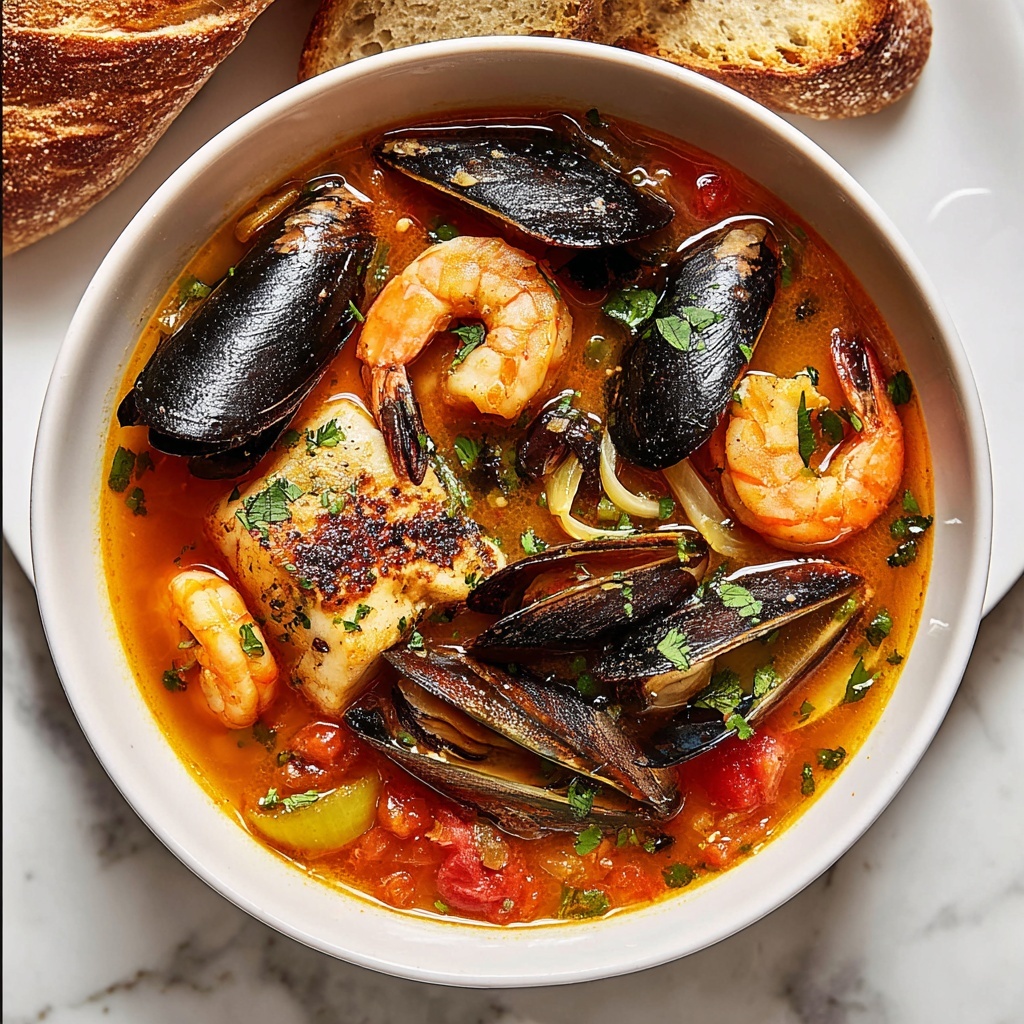
If you have a soft spot for seafood and crave something that sings the flavors of the French coast, then you will absolutely fall in love with this Classic Bouillabaisse: French Seafood Stew with Saffron and Toasted Baguette Recipe. This vibrant stew boasts a beautiful harmony of briny mussels, tender white fish, juicy shrimp, and scallops simmered with the warmth of saffron, fresh herbs, and a subtle hint of orange zest. Each spoonful offers a luscious, aromatic broth that feels like a cozy seaside hug, perfectly complemented by crunchy toasted baguette slices that soak up every last drop. It is nothing short of a culinary celebration in a bowl that you’ll want to share and savor again and again.
Ingredients You’ll Need
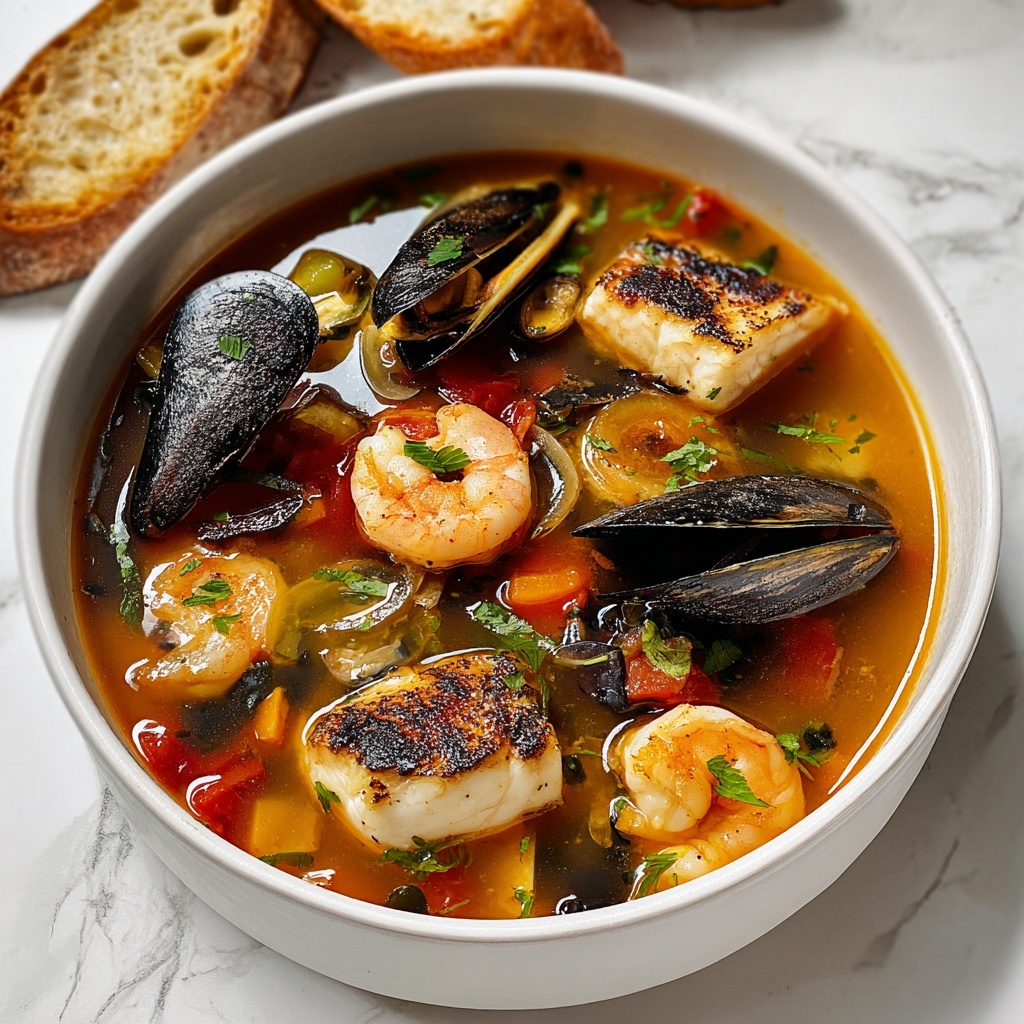
While the ingredient list might look a bit extensive, each one is essential, bringing unique flavors that build the depth and charm of this Classic Bouillabaisse: French Seafood Stew with Saffron and Toasted Baguette Recipe. From the sweet undertones of fennel and onions to the briny punch of mussels and shrimp, every component plays a starring role in texture, aroma, and color.
- Olive oil: The base for sautéing, adds richness and a hint of fruitiness.
- Onion, finely chopped: Provides sweetness and savory depth to the stew.
- Leeks (white parts only), thinly sliced: Enhance the broth with a subtle, delicate onion flavor.
- Garlic cloves, minced: Infuses the stew with warmth and aromatic intensity.
- Fennel bulb, thinly sliced: Adds a refreshing mild anise flavor that brightens the dish.
- Large tomatoes, chopped: Contribute acidity and a luscious body to the broth.
- Saffron threads: The star spice, imparting a beautiful golden color and fragrant earthiness.
- Orange zest: Brings a citrusy sparkle that balances the seafood richness.
- Bay leaves: Add subtle herbal notes that deepen the flavor profile.
- Fresh thyme sprig: Freshness and a slight woodsy aroma.
- Dried red pepper flakes (optional): A pinch of heat to awaken your taste buds.
- White grape juice or apple cider vinegar, vegetable or fish stock with vinegar: Adds acidity, complexity, and balances the sweet with a nice tang.
- Fish stock or water: The flavorful base for the stew’s broth.
- Firm white fish (cod, halibut, or monkfish), cut into chunks: Tender protein that soaks up the stew’s flavors.
- Mussels, scrubbed and debearded: Provide a briny pop and chewy texture.
- Shrimp, peeled and deveined: Sweet and succulent additions.
- Scallops: Tender and buttery bites that enrich the stew.
- Salt and freshly ground black pepper: To season perfectly.
- Baguette, sliced and toasted: The perfect vessel for dipping and savoring every spoonful.
- Rouille sauce (optional): A garlicky, spicy mayo that is a traditional and delightful accompaniment.
How to Make Classic Bouillabaisse: French Seafood Stew with Saffron and Toasted Baguette Recipe
Step 1: Sauté the Aromatics
Start by warming 2 tablespoons of olive oil in a large pot over medium heat. Toss in the finely chopped onion, sliced leeks, minced garlic, and thinly sliced fennel bulb. Sauté them gently for 5 to 7 minutes until they soften and release their heavenly fragrance. This step is crucial—it builds the flavorful foundation that everything else will lean on.
Step 2: Add the Tomatoes and Spices
Next, stir in the chopped large tomatoes along with the saffron threads, orange zest, bay leaves, fresh thyme sprig, and red pepper flakes if you’re using them. Let the mixture cook together for about 5 minutes. This simmering melds the spices and citrus notes, coaxing their colors and aromas to bloom into the base broth.
Step 3: Deglaze and Simmer the Broth
Pour in 1 cup of white grape juice or apple cider vinegar mixed with vegetable or fish stock that includes vinegar, then bring the pot to a boil. Immediately lower the heat and let it simmer for 10 minutes to intensify the flavors and mellow the acidity. This step adds complexity and a slight tang that cuts through the seafood richness beautifully.
Step 4: Build the Sea-Flavored Base
Pour in 4 cups of fish stock or water and bring it back up to a gentle boil. Season with salt and freshly ground black pepper. Lower the heat and let the broth simmer for 15 to 20 minutes. This slow melding allows the saffron to infuse deeper, while the liquid develops a beautifully layered flavor.
Step 5: Add the Seafood and Finish Cooking
Gently add the chunks of firm white fish, cleaned mussels, shrimp, and scallops into the simmering broth. Cover the pot and cook for 5 to 7 minutes until the seafood is perfectly tender and the mussels have opened up wide. Remember to discard any mussels that stubbornly refuse to open—they’re hungrier friends anyway!
Step 6: Final Taste and Serve
Give your stew one last taste, adjusting salt and pepper as needed. Ladle the hot, fragrant bouillabaisse into bowls, and don’t forget the star companion: the toasted baguette slices and optional rouille sauce on the side, ready for dipping. Prepare to be transported to the sunny shores of Provence with every bite.
How to Serve Classic Bouillabaisse: French Seafood Stew with Saffron and Toasted Baguette Recipe
Garnishes
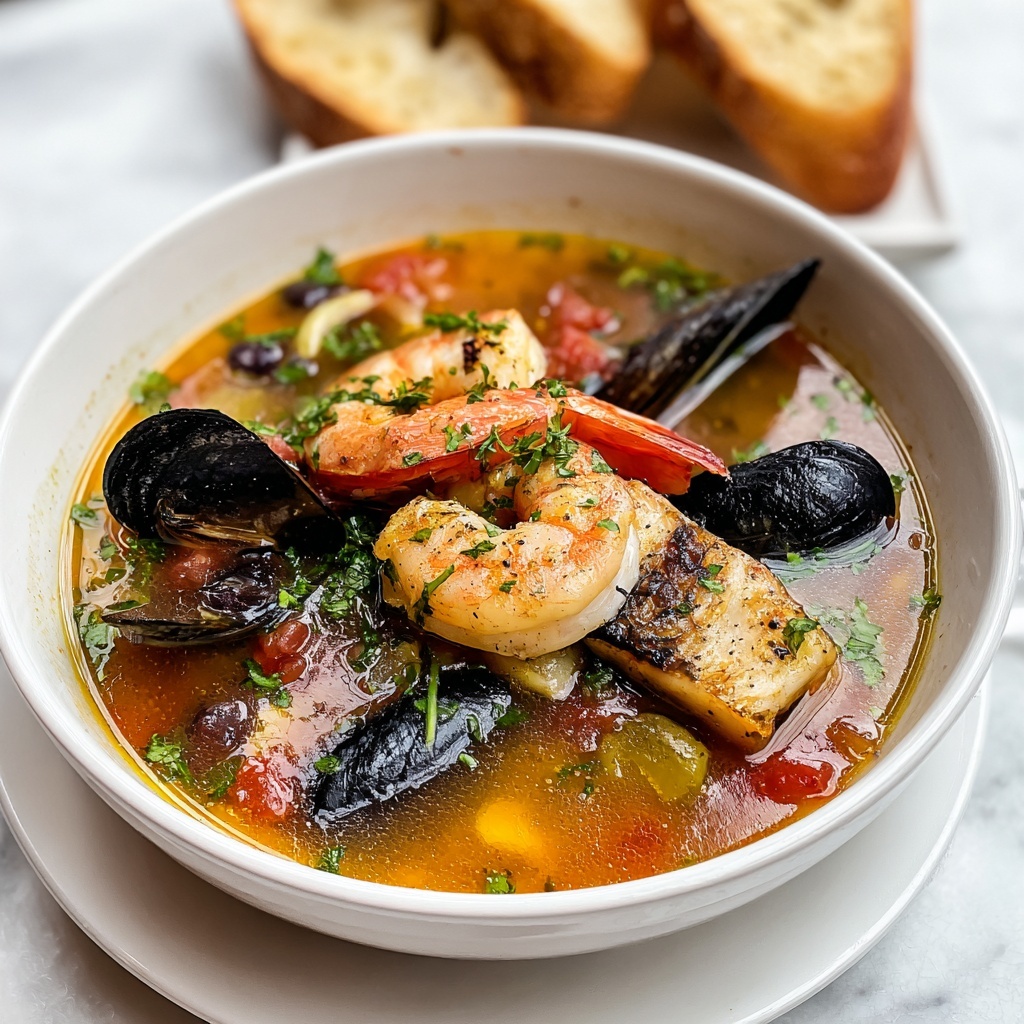
To elevate the presentation and flavor, fresh chopped parsley or a few sprigs of thyme make lovely garnishes. They add a pop of color and a fresh herbal note that brightens the stew’s warmth. A dollop of rouille sauce spread on toasted baguette slices offers a garlicky, slightly spicy edge that perfectly complements the saffron-rich broth.
Side Dishes
If you want to round out your meal, a simple green salad dressed with lemon vinaigrette or a crisp Niçoise salad makes a refreshing foil to the rich stew. For heartier options, buttery steamed new potatoes or ratatouille provide traditional French flair and balance.
Creative Ways to Present
For a rustic dinner party, serve the Classic Bouillabaisse: French Seafood Stew with Saffron and Toasted Baguette Recipe in individual earthenware bowls, with the baguette slices elegantly arranged alongside. You could also offer a little tray of seafood shells and lemon wedges for a hands-on, celebratory experience. This stew lends itself beautifully to a communal style feast, bringing friends and family together around the table.
Make Ahead and Storage
Storing Leftovers
Store leftover bouillabaisse in an airtight container in the refrigerator for up to two days. The flavors will continue to develop, making it even tastier the next day. Keep the toasted baguette separate to maintain its crunch.
Freezing
Because seafood can lose texture when frozen and thawed, it’s best to freeze the broth separately without the seafood. Freeze in airtight containers for up to one month. When ready, thaw overnight in the refrigerator and gently reheat before adding freshly cooked seafood.
Reheating
Reheat the stew slowly over low heat to avoid overcooking the delicate seafood. If you separated the broth and seafood, cook the seafood fresh and add it to the warmed broth just before serving for the best texture and taste.
FAQs
Can I use other seafood in this bouillabaisse?
Absolutely! While this recipe calls for mussels, shrimp, scallops, and white fish, you can experiment with clams, crab, lobster, or even squid depending on availability and personal preference. Just keep cooking times in mind as different seafood cooks at different rates.
Is saffron essential for the flavor?
Saffron is a defining ingredient that gives the stew its signature golden color and unique earthy aroma. Skipping it will change the character of the dish, but if necessary, you can substitute a pinch of turmeric for color, though the flavor won’t be quite the same.
What is rouille sauce and do I have to use it?
Rouille is a traditional Provençal sauce made from garlic, chili, and olive oil often spread on bread served alongside bouillabaisse. It adds a lovely spicy, garlicky kick but is entirely optional. The stew is delicious on its own or with simple toasted baguette.
Can I make this dish vegetarian or vegan?
The essence of a Classic Bouillabaisse: French Seafood Stew with Saffron and Toasted Baguette Recipe lies in its seafood. However, you can create a vegetarian version by using vegetable stock and hearty vegetables like artichokes, potatoes, and chickpeas, along with saffron and herbs for flavor complexity.
How do I know when the mussels are cooked?
When mussels open their shells after being added to the simmering broth, they are cooked and safe to eat. Discard any mussels that remain closed, as they may be spoiled or undercooked. This visual cue makes it simple to know when your stew is ready.
Final Thoughts
There is something so special about gathering around a bowl of Classic Bouillabaisse: French Seafood Stew with Saffron and Toasted Baguette Recipe—a dish that invites warmth, rich flavors, and joyful company. Whether it’s for a cozy dinner or a celebratory meal, this stew’s vibrant aroma and delicious complexity deliver a little taste of French seaside magic right to your kitchen. I wholeheartedly encourage you to give it a try and create a memorable experience with every spoonful.
Print
Classic Bouillabaisse: French Seafood Stew with Saffron and Toasted Baguette Recipe
- Prep Time: 15 minutes
- Cook Time: 40 minutes
- Total Time: 55 minutes
- Yield: 4 servings
- Category: Soup/Stew
- Method: Stovetop
- Cuisine: French
Description
A classic French seafood stew, Bouillabaisse combines a fragrant blend of fresh fish, shellfish, and aromatic vegetables simmered in a saffron-infused broth, served with crusty toasted baguette and optional rouille sauce for an authentic Mediterranean experience.
Ingredients
Seafood
- 1/2 pound firm white fish (cod, halibut, or monkfish), cut into chunks
- 1/2 pound mussels, scrubbed and debearded
- 1/2 pound shrimp, peeled and deveined
- 1/2 pound scallops
Vegetables & Aromatics
- 1 large onion, finely chopped
- 2 leeks (white parts only), thinly sliced
- 3 garlic cloves, minced
- 1 fennel bulb, thinly sliced
- 4 large tomatoes, chopped
Liquids & Broth
- 1 cup White Grape Juice or Apple Cider Vinegar, Vegetable or Fish Stock with Vinegar
- 4 cups fish stock or water
Seasonings & Herbs
- 2 tablespoons olive oil
- 1/2 teaspoon saffron threads
- 1 teaspoon orange zest
- 2 bay leaves
- 1 sprig fresh thyme
- 1/2 teaspoon dried red pepper flakes (optional)
- Salt and freshly ground black pepper to taste
To Serve
- 1 baguette, sliced and toasted
- Rouille sauce (optional, for serving)
Instructions
- Heat the Oil: Heat olive oil in a large pot over medium heat to prepare the base for sautéing the vegetables.
- Sauté Vegetables: Add onion, leeks, garlic, and fennel to the pot. Sauté for 5–7 minutes until they are softened and release a fragrant aroma, forming the stew’s flavorful foundation.
- Add Tomatoes and Spices: Stir in chopped tomatoes, saffron threads, orange zest, bay leaves, fresh thyme, and optional red pepper flakes. Cook this mixture for 5 minutes to meld the flavors.
- Add Vinegar or Grape Juice: Pour in the White Grape Juice or Apple Cider Vinegar mixed with vegetable or fish stock with vinegar. Bring the mixture to a boil, then lower the heat to simmer gently for 10 minutes, allowing the flavors to deepen.
- Add Fish Stock: Add 4 cups of fish stock and bring the broth back to a gentle boil. Season with salt and freshly ground black pepper according to taste.
- Simmer Broth: Reduce heat to low and let the broth simmer for 15–20 minutes to develop more complexity in the flavor.
- Add Seafood: Carefully add chunks of firm white fish, mussels, shrimp, and scallops to the pot. Cover and cook for 5–7 minutes until the seafood is cooked through and the mussels have opened. Discard any unopened mussels.
- Adjust and Serve: Taste the bouillabaisse and adjust seasoning as needed. Serve hot with toasted baguette slices and optionally rouille sauce for a traditional accompaniment.
Notes
- Saffron adds a distinctive flavor and color; use high-quality threads for best results.
- Discard any mussels that do not open after cooking to avoid food safety issues.
- Rouille sauce is a garlic and chili mayonnaise typically served alongside bouillabaisse for added flavor and spice.
- Use fresh seafood for the best texture and taste.
- Substitute fish stock with vegetable stock for a lighter broth if preferred.
- This stew is best enjoyed immediately but can be refrigerated and gently reheated the next day.